
Type of forces in Mechanics| use in Mechanical Design 2026
Force is an external effect which changes the state of a body from rest position into motion.
- Force is a vector quantity.
- There are many types of force systems in engineering. To understand them, we have to understand the basic graphical representation needed to understand the force system:
- Magnitude
- Direction
- Point of application
- Line of action
- Arrow head
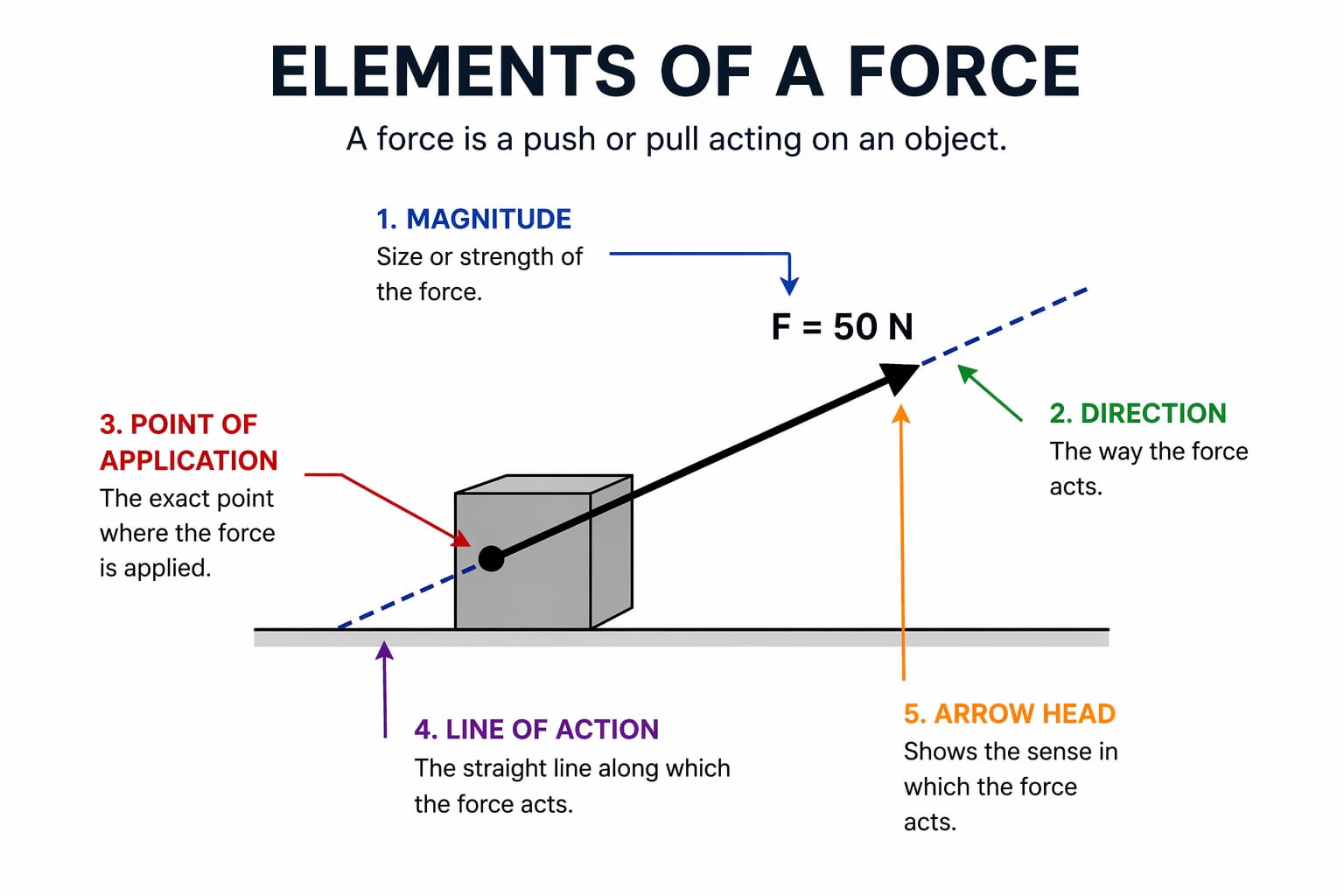
Force can act in a single line of action, or it can act perpendicular to the line of action, or it can act in a single plane, or it can act in a 3D body. To understand this type of condition, we have to understand the force system.
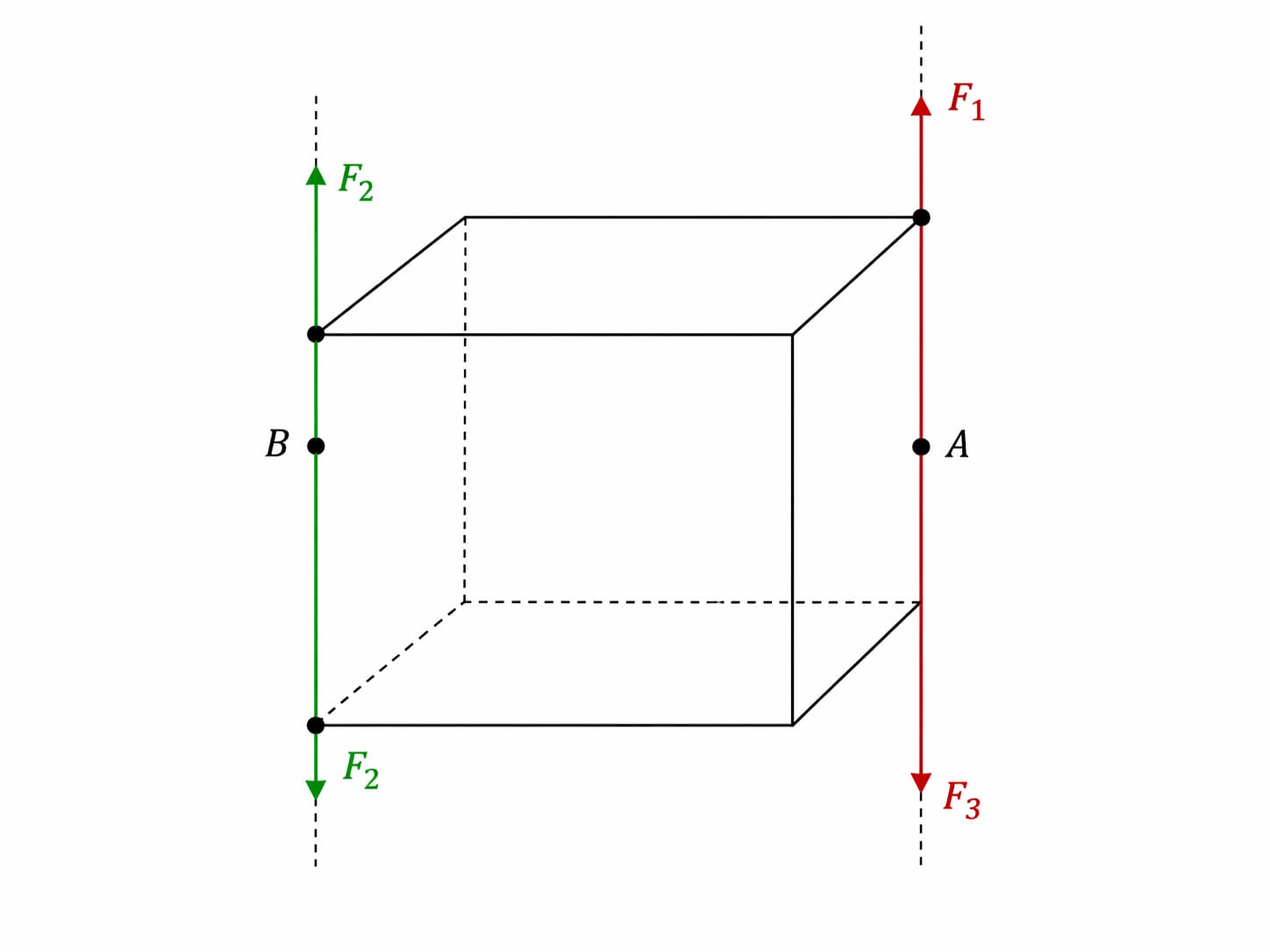
1.Parallel force system(coplaner)
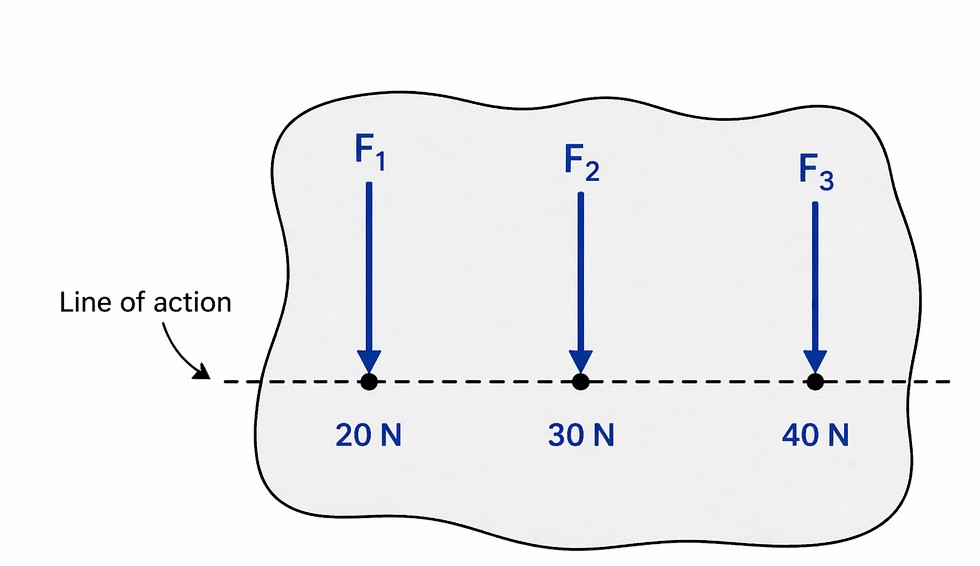
Example: When you lift a weight against gravity, the applied force acts vertically upward while gravity acts vertically downward. Since these forces act in parallel lines.
2. Concurrent force system
When the lines of action of all forces intersect at a single point, it is called a concurrent force system. It is important to remember that only the lines of action intersect at one point, while each force may have different directions and magnitudes. This is as shown in the image.
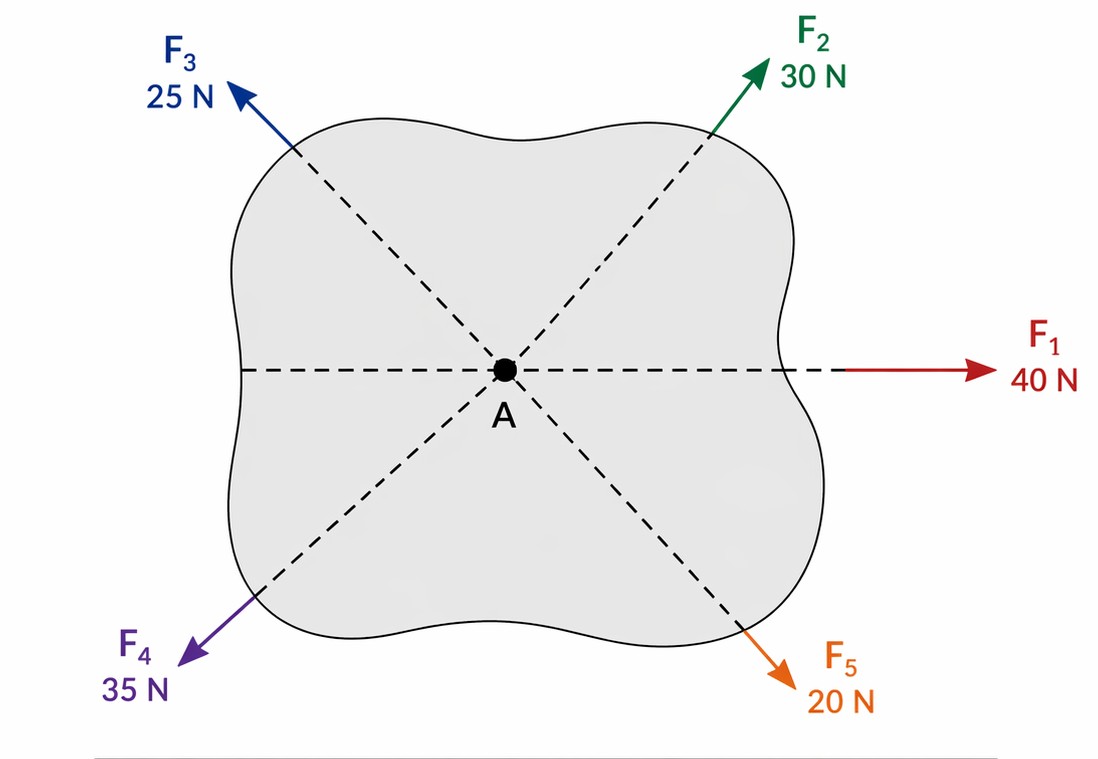
Example: When a load, such as a metal block, is lifted using a crane and chains are attached to its four corners, all the chains meet and connect at a single point on the crane hook. In this condition, all the forces act along lines that intersect at one point.
3. Not parallel force not concurrent force system
In this force system, the forces acting on the body are neither parallel to each other nor do their lines of action intersect at a single point. Here, the lines of action of the forces may intersect at different points, and the point of intersection can even lie outside the body, as shown in the image.
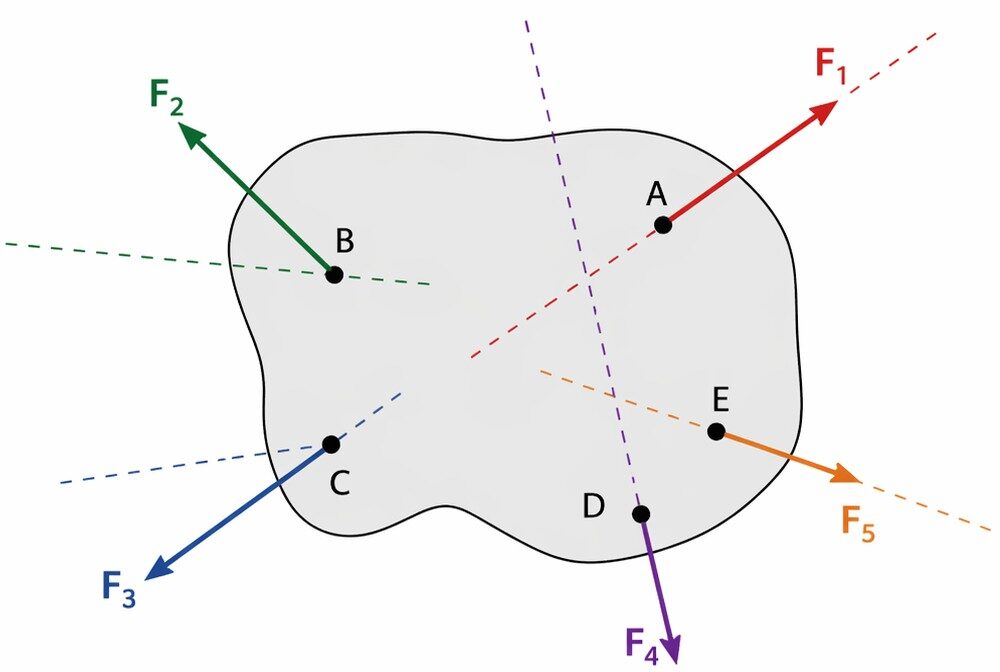
Example: A ladder leaning against a wall. The weight, wall reaction, and ground reaction act in different directions, and their lines of action are neither parallel nor meet at one point. Some may even intersect outside the body.
4. Collinear force system
In this force system, all forces act along a single line of action in the same direction, as shown in the image.
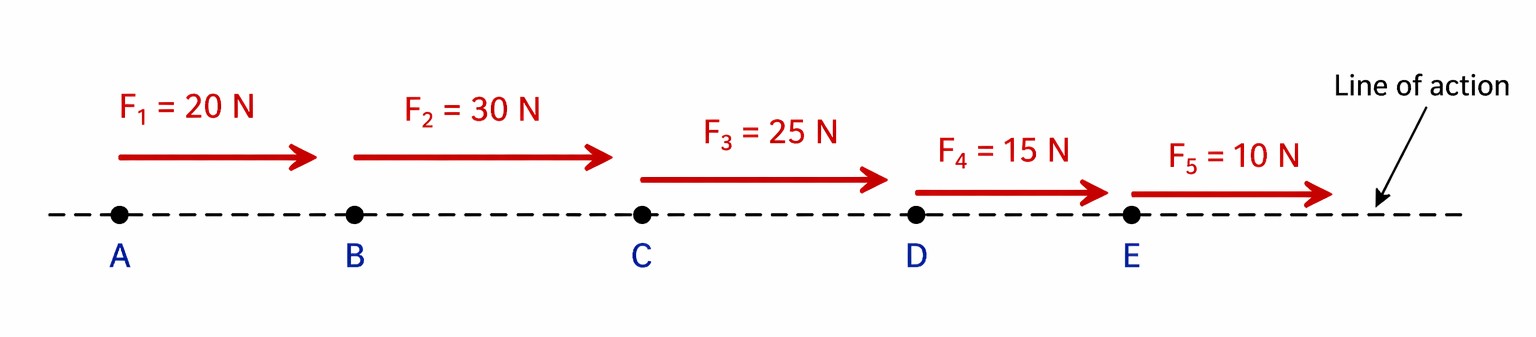
1. Parallel force system
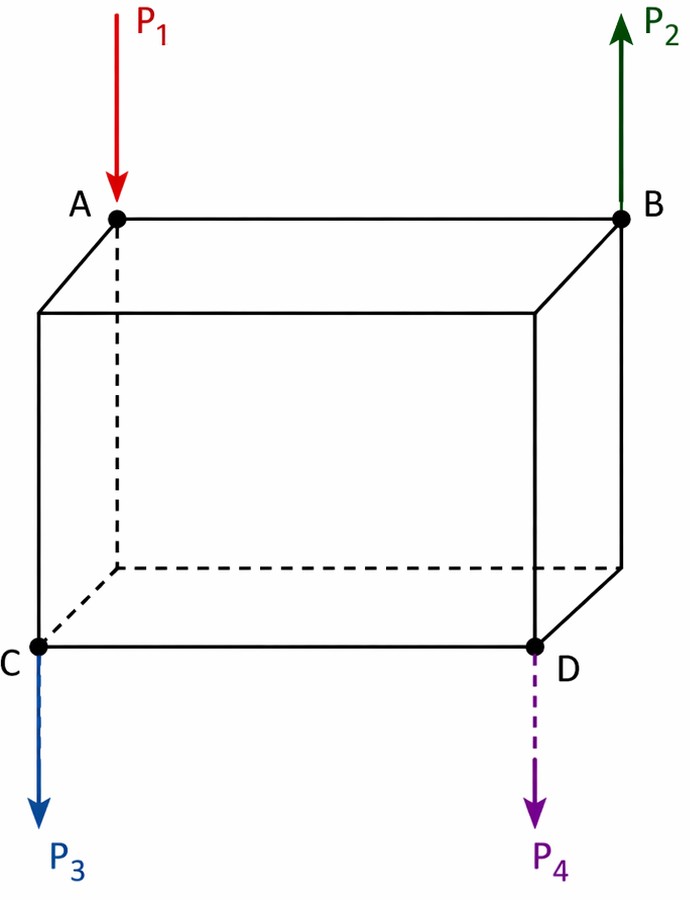
Example: A table resting on the ground. The weight of the table is distributed equally through its four legs, and each leg applies a parallel force downward on the ground.
2. Concurrent force system
In this force system, the lines of action of all forces intersect at a single point, such as one corner of a 3D cube. The forces may act in different planes, and their directions can also be different, as shown in the image.
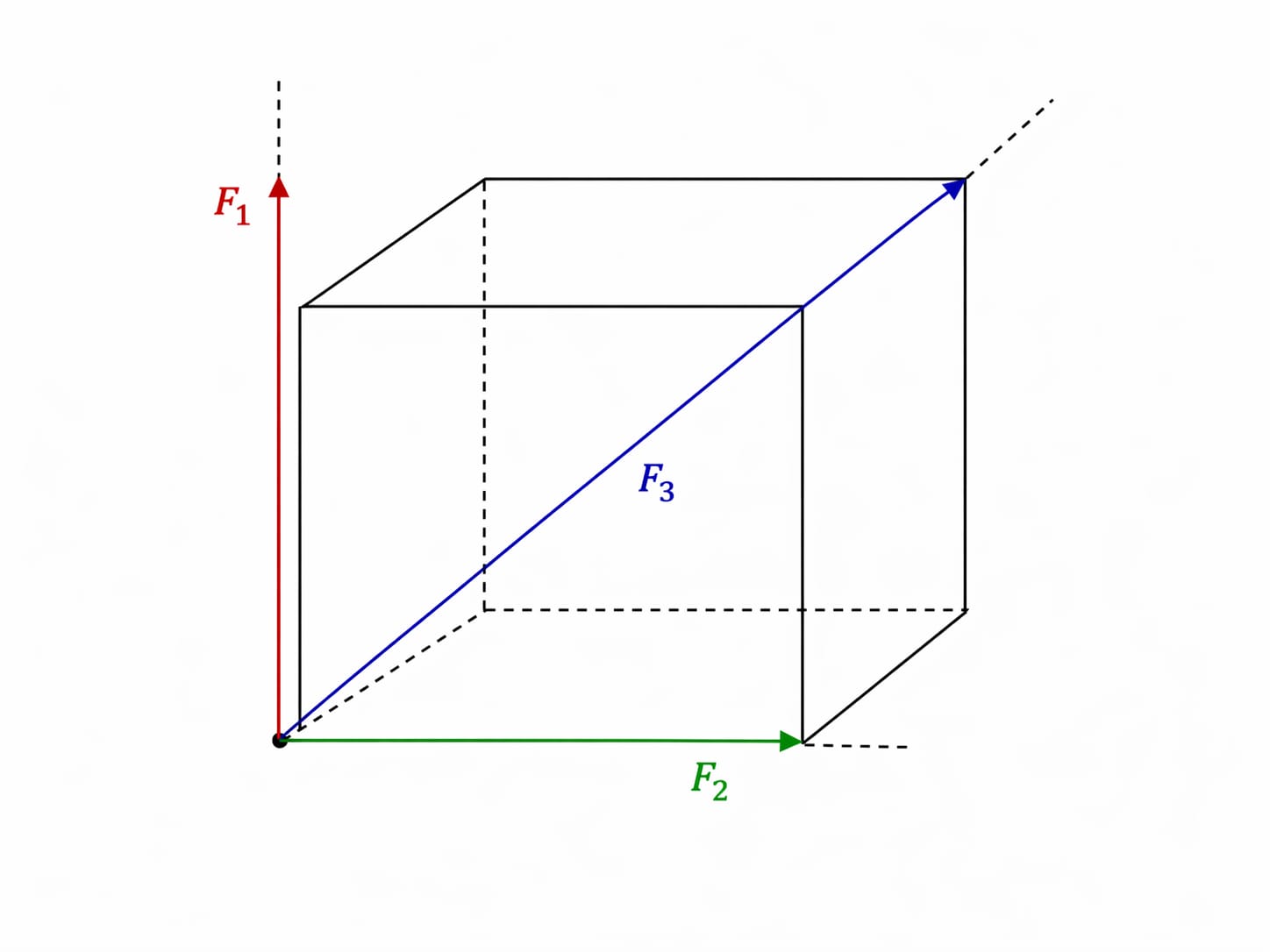
Example: The balloon is held by three or more cables attached to one point on the basket. At the same time, wind pushes the balloon, and forces like lift and drag also act on it. All these forces act in different directions in 3D,
3. Not parallel not concurrent force system
In this force system, the lines of action of the forces are neither parallel to each other nor do they intersect at a single point in a 3D body (cube), as shown in the image.
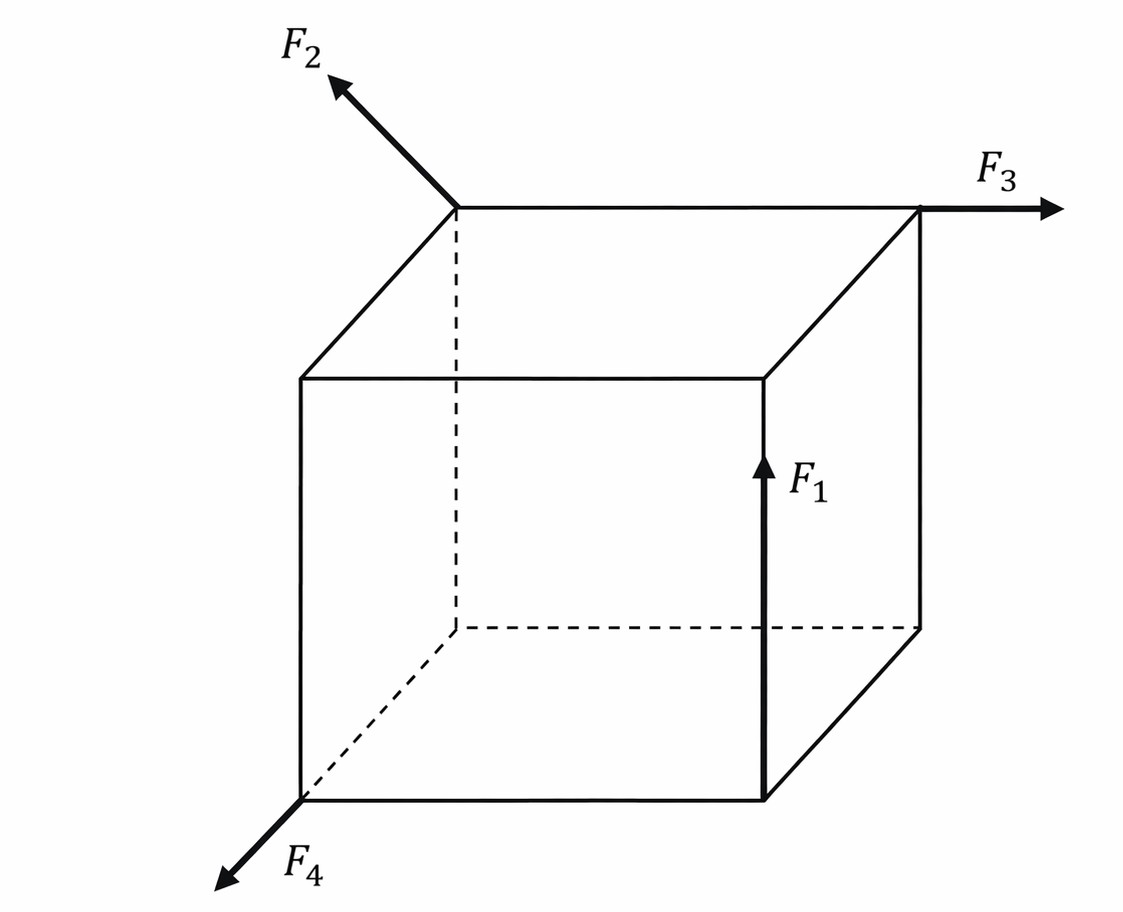
Example: Driving a car with one hand on the steering wheel while wind hits the side of the car.
4. Collinear force system
In this force system, all forces act along a single line of action at any plane. That is why it does not exist in a 3D object and is considered to lie in a single plane (coplanar), as shown in the image.
Good